
Custom rope caps are returning to golf, outdoor, resort and lifestyle collections with a more refined, retail-focused appearance.
The defining feature is a cord or “rope” running across the front of the cap, just above the brim. Although this detail originated in traditional golf and sports headwear, modern rope caps now use lightweight performance fabrics, vintage color combinations, structured crowns and subtle private-label branding.
Recent headwear coverage shows that rope caps are increasingly influenced by the convergence of golf, team sports, retail and lifestyle design. Buyers are also expecting branded headwear to have genuine retail quality rather than looking like inexpensive promotional merchandise.
For brands sourcing custom rope caps from China, the key decisions involve more than selecting a color and adding a logo. Fabric, crown structure, rope dimensions, closure, decoration, MOQ and quality standards can all affect the final result.
This guide explains what B2B buyers should confirm before approving a rope cap for bulk production.
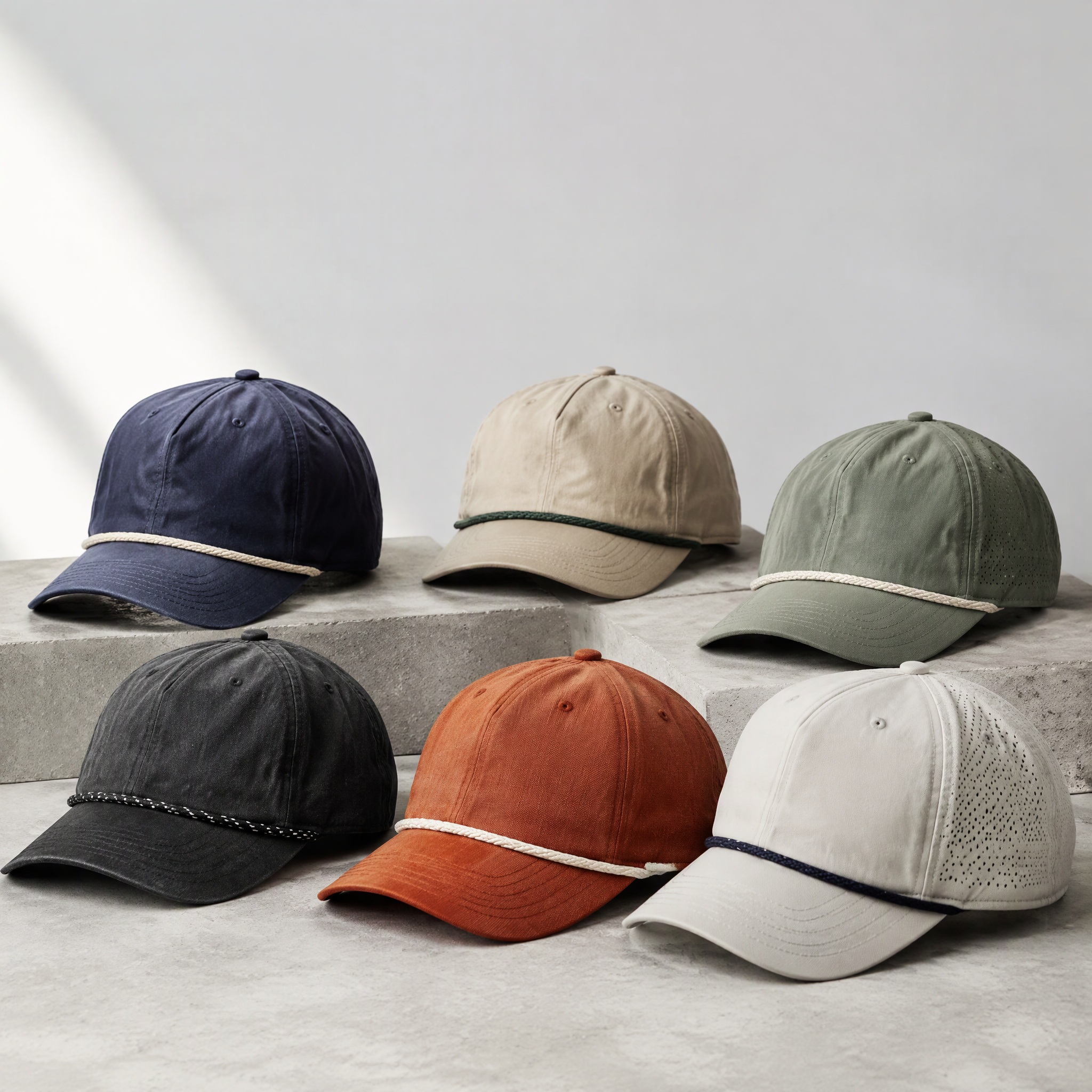
A rope cap is a baseball-style hat featuring a decorative cord across the front, positioned where the crown meets the brim.
The rope is normally secured inside the side seams or behind the front panels. Depending on the design, it may match the crown, contrast with the main fabric or coordinate with another detail such as the brim, logo or closure.
Modern rope caps are available in several constructions:
The rope itself does not define the entire product. Crown shape, material and decoration determine whether the finished cap feels suitable for golf, streetwear, outdoor use or premium branded merchandise.
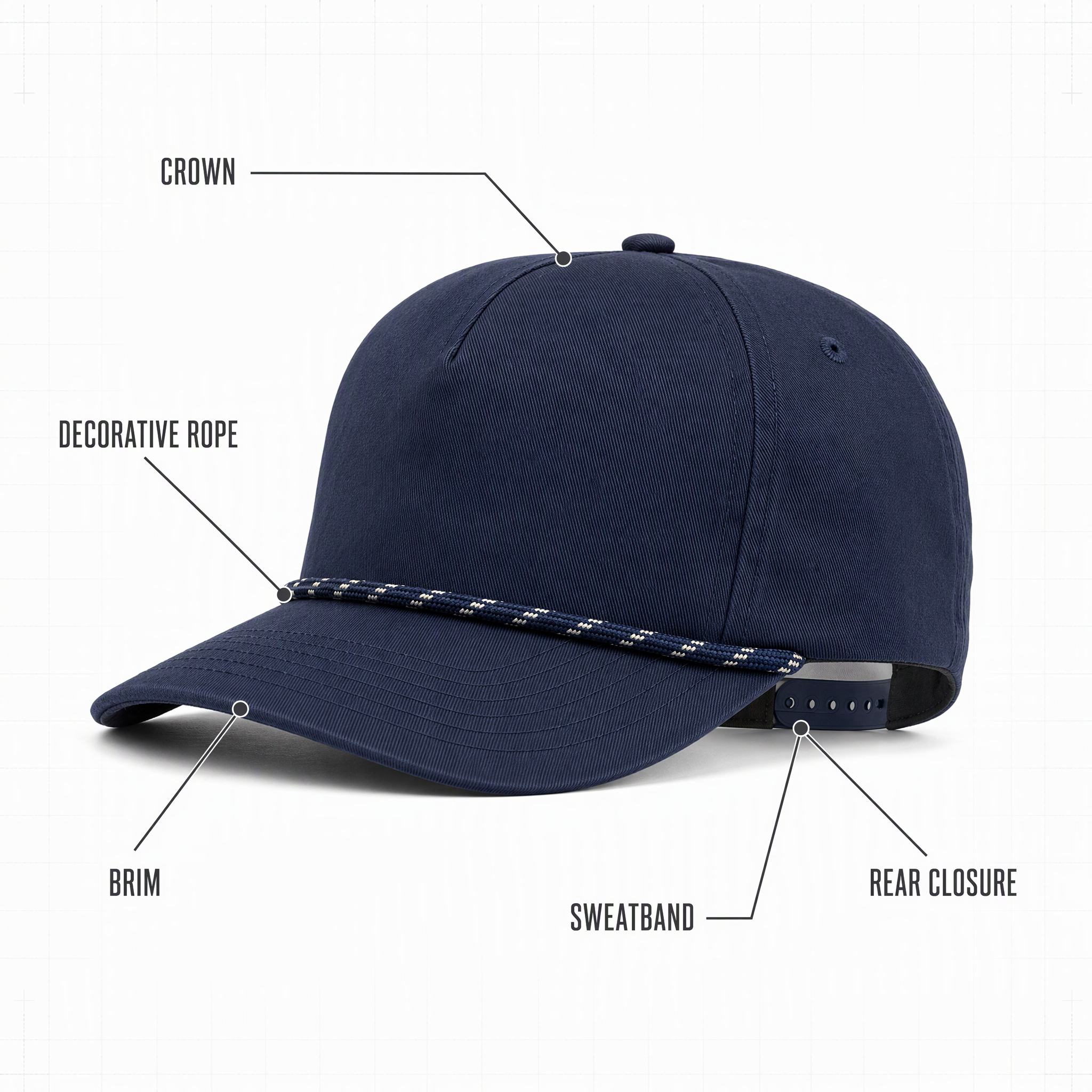
Rope caps combine a familiar baseball-cap silhouette with an easily recognizable design element.
This makes them useful for brands seeking a distinctive product without developing a completely unfamiliar hat shape.
They are particularly relevant to:
Rope caps also work well with both retro and contemporary design directions.
A cotton cap with a contrast rope and embroidered patch can create a heritage appearance. A lightweight polyester version with a tonal rope and silicone transfer can feel modern and performance-focused.
The same basic detail can therefore be adapted to several target markets.
Before selecting fabric or decoration, brands should decide which cap structure fits the intended customer.
A five-panel rope cap provides a relatively large, uninterrupted front decoration area.
It works well for:
The angle and height of the front panel require careful sampling. If the panel is too tall or stiff, the cap may look oversized. If it is too soft, the front logo may not sit cleanly.
A six-panel cap has a center seam running through the front. It offers a familiar baseball-cap shape and can be produced in structured or unstructured versions.
It is suitable for:
Logo placement must account for the center seam. Very fine artwork or small text should not be positioned where the seam may affect embroidery clarity.
An A-frame cap generally has a higher, more defined front section. This creates strong logo visibility and a retail-inspired shape.
It is often selected for:
The front structure must be balanced carefully. Excessively stiff reinforcement can make the cap uncomfortable or create an unnatural crown shape.
A rope trucker cap combines front fabric panels with mesh back panels.
It provides:
Buyers should check mesh quality, side-seam alignment and the transition between the rope and front panels.
Performance rope caps use lightweight technical materials and may include:
These products are suitable for golf, running, travel and active outdoor use.
The logo method must be selected carefully because dense embroidery can wrinkle lightweight fabric.
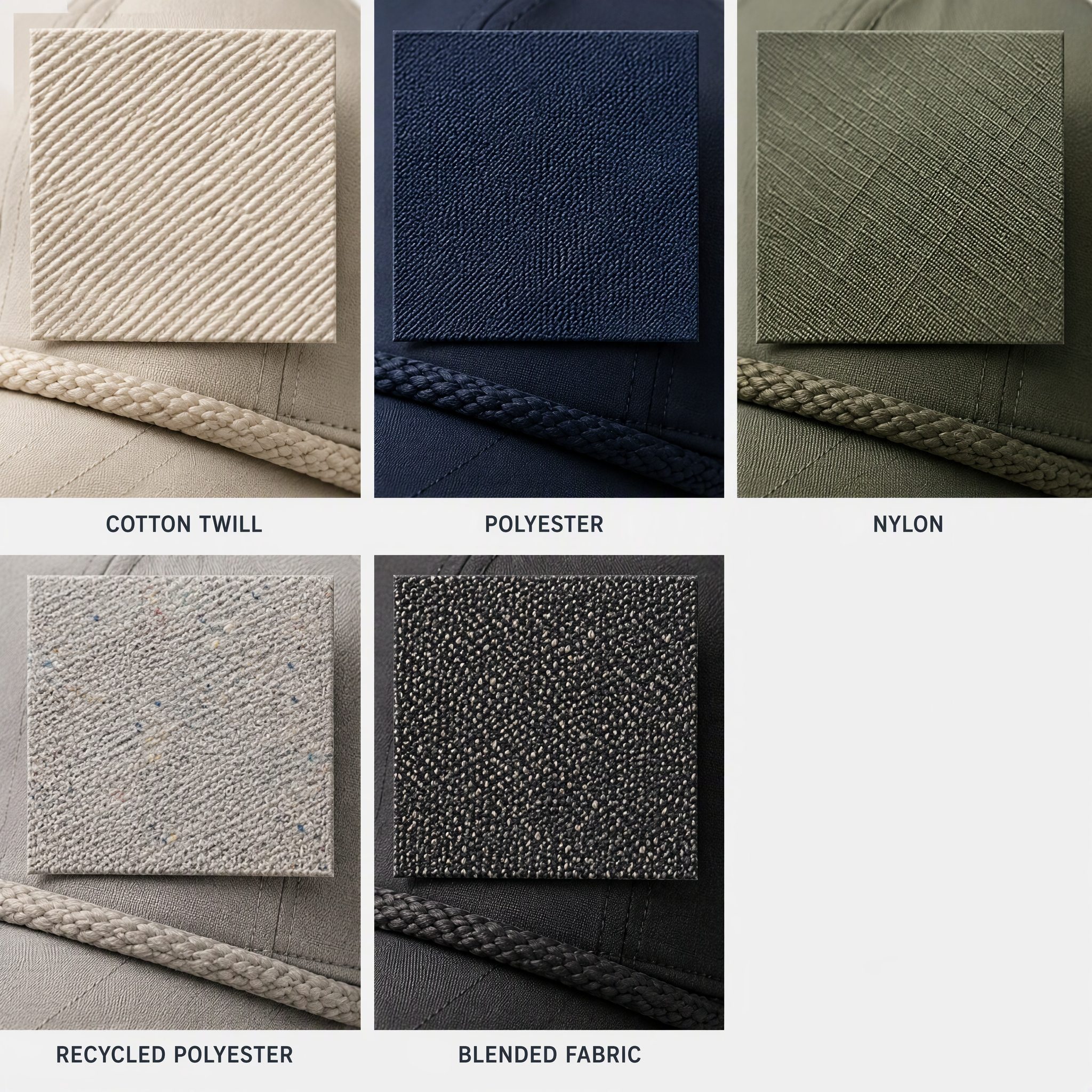
Fabric influences the hat’s appearance, comfort, performance, price and minimum order quantity.
There is no single best rope cap material. The correct choice depends on how the product will be used.
Cotton twill is a versatile option for lifestyle, golf, hospitality and branded merchandise.
Advantages include:
Cotton twill can be structured or unstructured. It also works well with contrasting ropes, woven patches and leather details.
Possible limitations include slower drying and lower water resistance compared with technical polyester or nylon.
Brands should check the fabric weight, weave density, shrinkage and colorfastness before bulk production.
Washed cotton creates a softer, more vintage-inspired rope cap.
Common treatments include:
Washed rope caps are especially suitable for breweries, cafés, resorts, music brands and casual fashion collections.
However, washing naturally creates some variation. Buyers should establish an acceptable color range and understand that every hat may not appear completely identical.
The bulk production standard should specify:
If the cap is washed after embroidery, the logo thread and backing must also be compatible with the process.
Polyester is commonly selected for golf and performance rope caps.
Its potential advantages include:
Polyester caps can use smooth, textured or heathered surfaces. Some materials also include mechanical stretch.
When reviewing a polyester sample, check whether the fabric feels comfortable and sufficiently premium. Very thin or shiny polyester may create a low-cost promotional appearance unless that finish is intentional.
Nylon is useful for outdoor, travel and modern lifestyle rope caps.
It can provide:
Nylon works particularly well with smaller logos, heat transfers and tonal rope details.
Embroidery testing is essential. Improper stitch density or backing can create puckering around the logo.
Stretch fabrics can improve comfort and help a performance cap follow the shape of the head.
These blends are often used for:
The factory must control fabric direction during cutting. Inconsistent stretch orientation can affect fit and crown shape.
Buyers should also confirm whether the closure and sweatband provide enough adjustment for the intended size range.
Recycled polyester can support a brand’s material strategy while retaining many of the functional benefits associated with conventional polyester.
Before making environmental claims, buyers should confirm:
The rope, thread, closure, sweatband and labels may have different material compositions from the main fabric.
Product descriptions should distinguish between “made with recycled polyester” and broader claims suggesting that the entire hat is recycled.
Cotton-linen blends, ripstop, seersucker and other textured fabrics can give rope caps a more distinctive retail appearance.
These materials suit:
Texture affects logo application. A woven patch may produce a cleaner result than direct embroidery on an irregular or loosely woven surface.
Sampling should evaluate fabric stability, shrinkage and abrasion resistance.
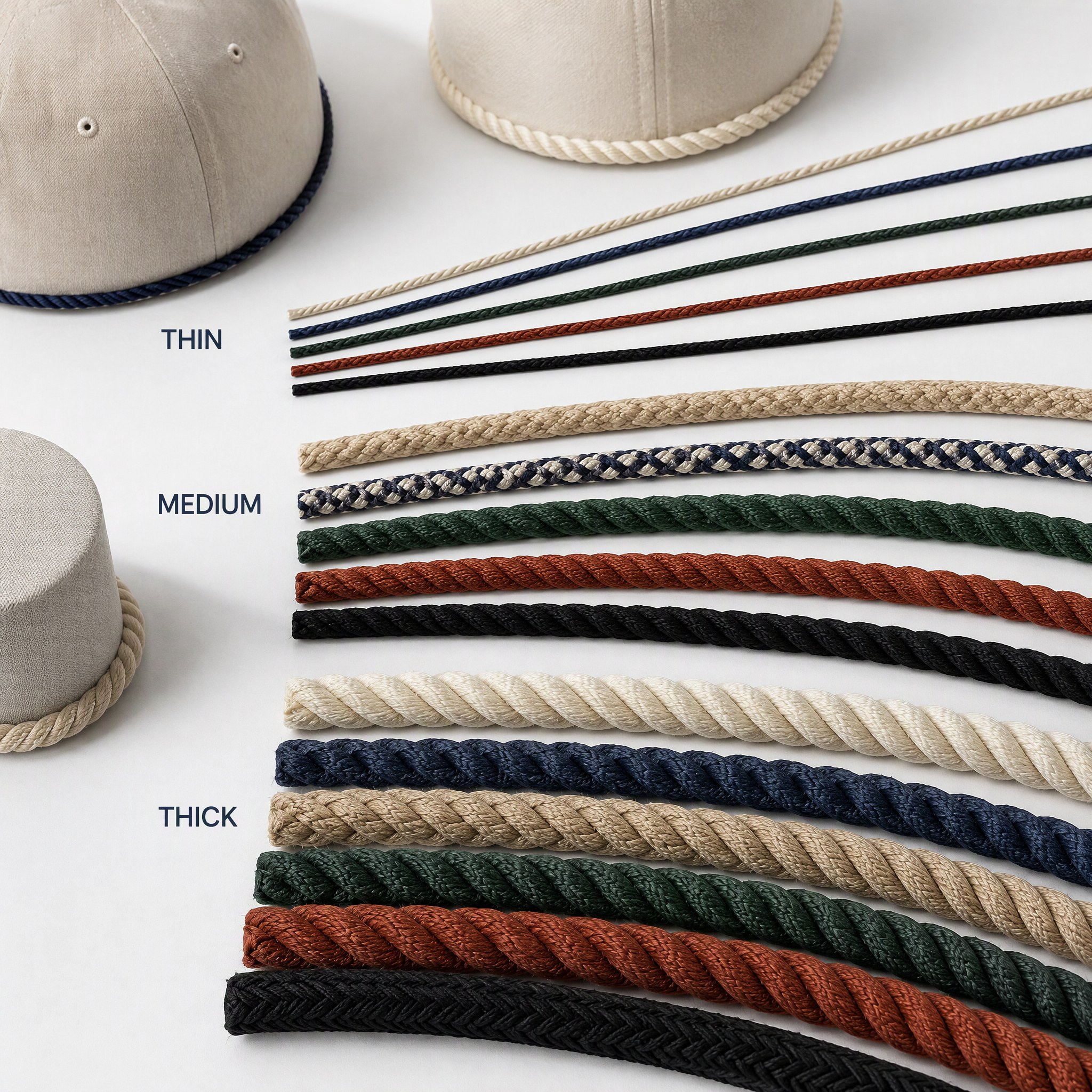
The rope may appear simple, but small differences can change the entire design.
Brands should specify:
A thick rope creates a bold retro appearance. A thinner cord feels more subtle and modern.
The ideal diameter depends on crown height and brim width. An oversized rope can visually dominate a low-profile cap, while a very thin rope may disappear on a high-crown design.
A matching rope creates quiet, tonal branding. A contrasting rope makes the design more recognizable.
Popular combinations include:
Custom-dyed rope may require a higher MOQ than standard available colors.
The rope should sit evenly across the front without sagging, twisting or pulling the side panels.
Inspect where it enters the seams. Attachment points should be secure and symmetrical.
If the rope is too tight, it may distort the crown. If it is too loose, it may move or create an unfinished appearance.
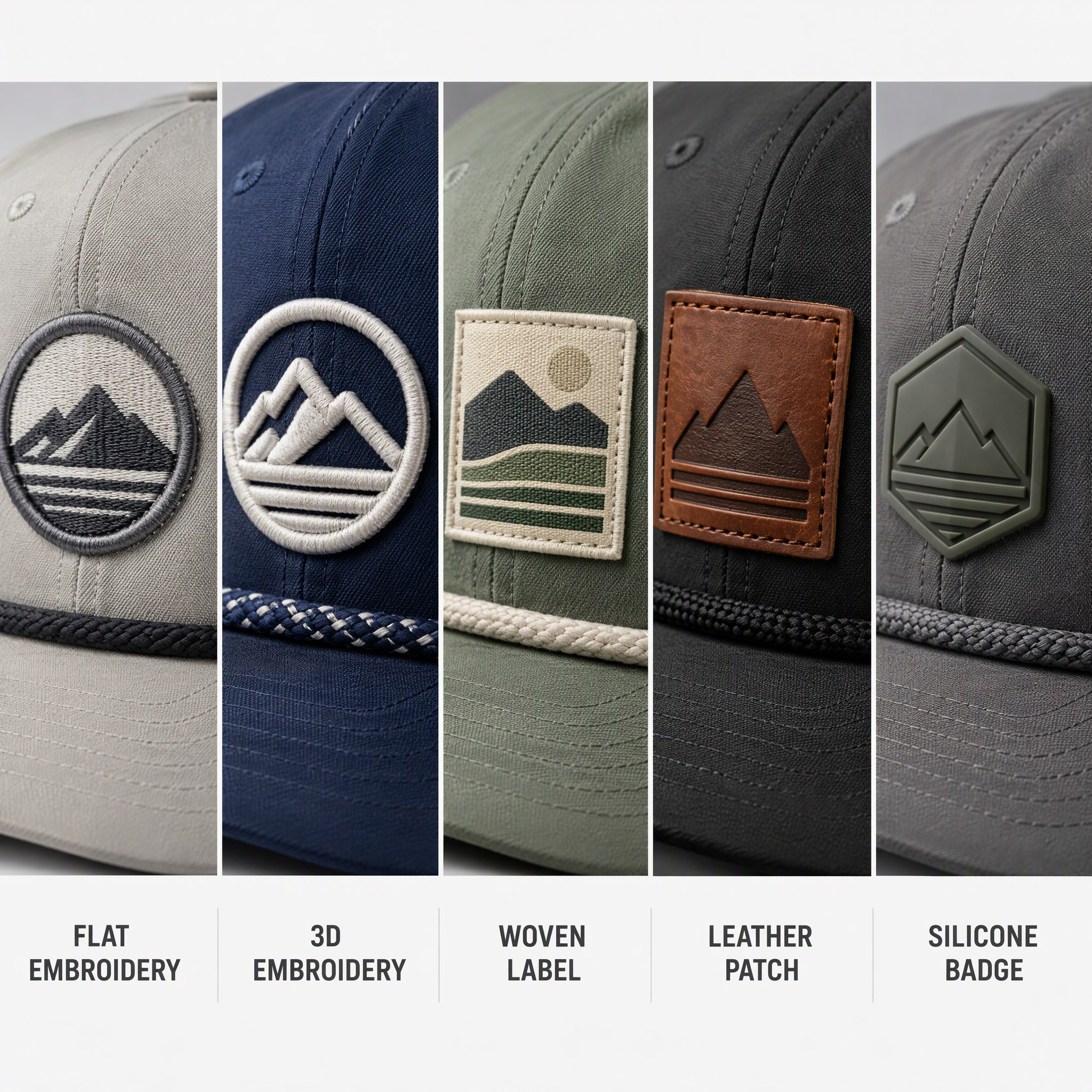
The decoration should work with the rope instead of competing with it.
Because the rope runs above the brim, the available vertical logo space may be smaller than on a standard cap.
Flat embroidery is suitable for logos, text and small graphic elements.
Check:
The logo should not touch the rope unless the overlap is an intentional part of the design.
3D puff embroidery works best on structured front panels with bold artwork.
It may be less suitable for lightweight performance fabrics or designs containing very fine details.
Patches can create a heritage, golf or outdoor appearance.
Common shapes include:
The patch dimensions must be balanced with the rope position and front-panel seams.
Leather-style patches work well for outdoor, resort and workwear-inspired collections.
Available treatments may include:
Buyers should confirm the material composition rather than assuming every leather-looking patch uses genuine leather.
These methods suit performance fabrics because they can be lighter than dense embroidery.
Testing should cover:
MOQ means minimum order quantity. It is the smallest quantity a factory will accept for a particular order, design, color or material.
There is no universal MOQ for custom rope caps.
The required quantity depends on:
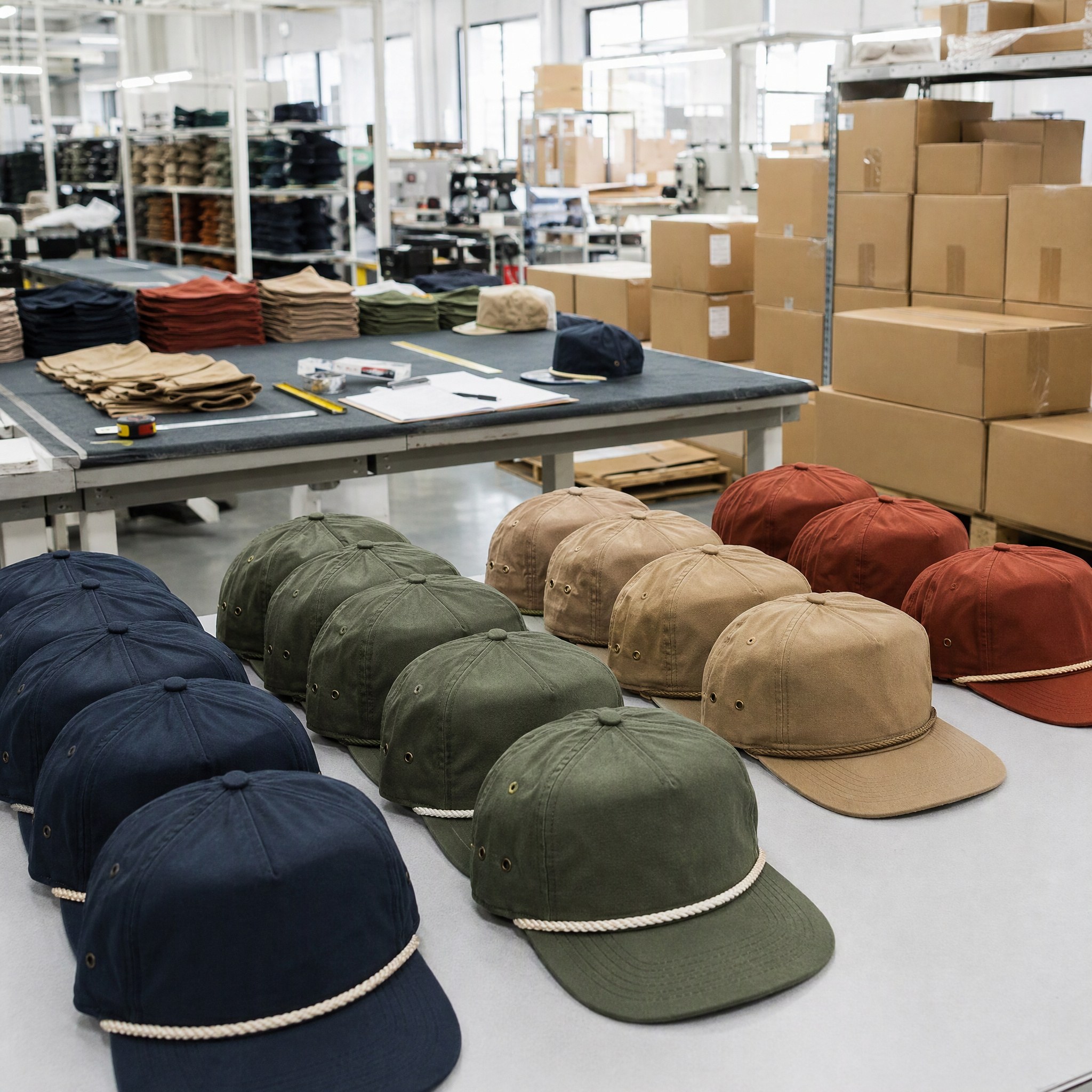
A simple rope cap using available fabric and standard components may support a lower MOQ than a completely new design using custom-dyed material, newly molded hardware and several colorways.
Buyers should ask whether the quoted MOQ applies to:
For example, a factory may accept one total quantity but still require a minimum number of pieces per color because of cutting, embroidery or material preparation.
Brands may improve order flexibility by:
However, reducing MOQ should not compromise the product’s positioning. A lower minimum is not helpful if the available components do not match the brand.
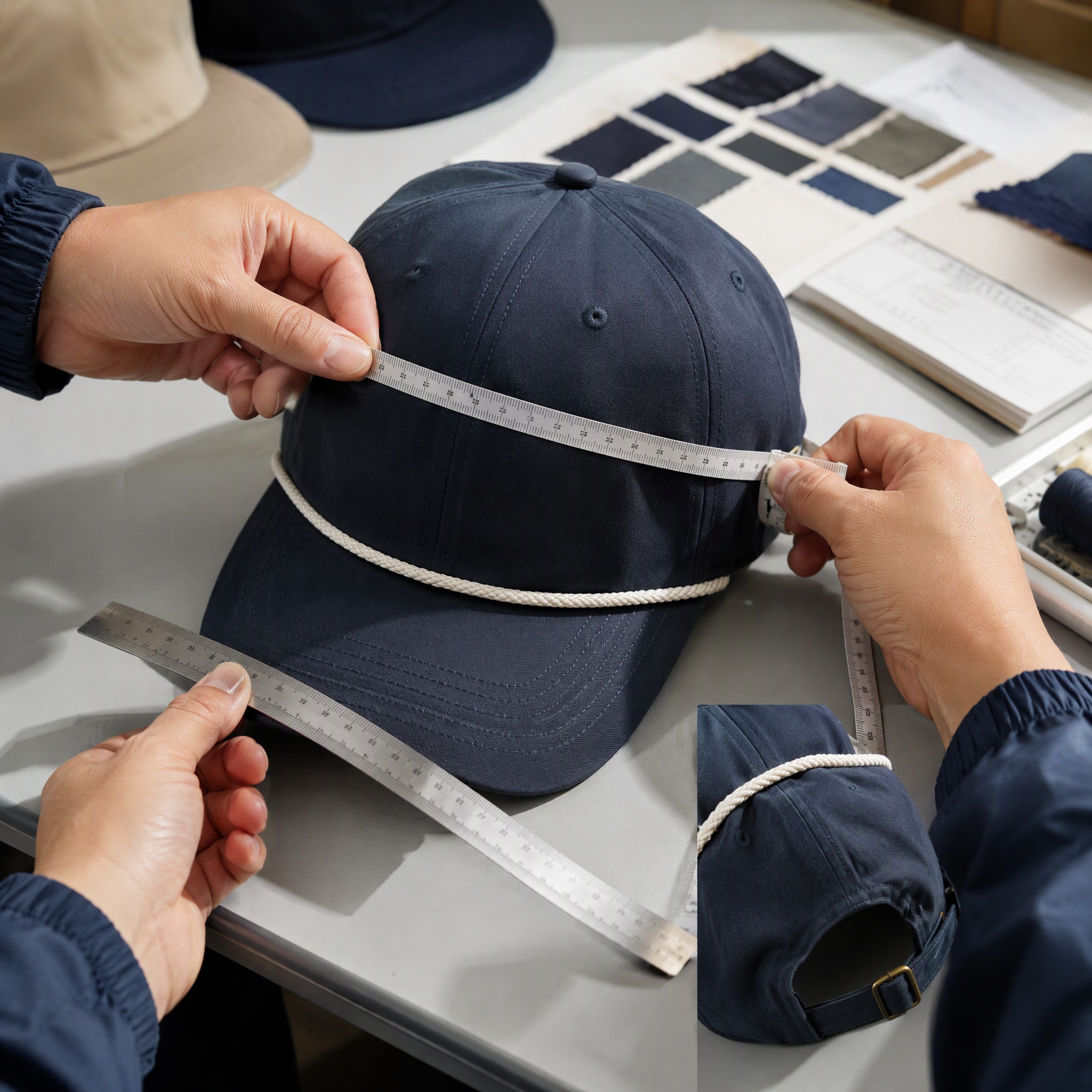
A physical sample is essential for custom rope caps.
Digital mockups can show colors and logo placement, but they cannot confirm:
A clear development request should include:
Reference photographs are useful, but measurements and written specifications reduce uncertainty.
Evaluate the sample from all angles and test it on several people.
Confirm:
Provide specific revision instructions. Instead of saying “make the rope smaller,” state the required diameter or provide an approved reference sample.
A reliable China hat factory should inspect the product during several stages rather than waiting until production is complete.
Before cutting begins, the factory should verify:
Material problems identified at this stage are easier to correct than defects found after sewing.
Panel dimensions and fabric direction must remain consistent.
For stretch or directional fabrics, incorrect cutting can affect fit, appearance and performance.
Inspectors should verify:
Embroidery, patches and transfers should be checked before the hat is fully assembled when the production sequence allows.
The factory should confirm:
An approved decoration sample should be available for comparison.
During assembly, inspectors should monitor:
Checking rope alignment during sewing is particularly important. It is difficult to correct after the side seams and brim have been completed.
Finished rope caps should be checked for:
The inspection standard should define which defects are critical, major or minor.
For larger orders, buyers can also arrange a third-party pre-shipment inspection.
Buyers should watch for the following issues:
One side may sit higher than the other, or the rope may not remain parallel to the brim.
The rope may sag, rotate or shift during wear.
Rope tension, embroidery or incorrect reinforcement may pull the front panels out of shape.
The design may appear crowded, or the embroidery machine may have difficulty sewing the lower portion cleanly.
Some caps may arrive flatter or more curved than the approved sample.
The crown, rope, brim, closure and embroidery may look different from the digital mockup when viewed together physically.
This is particularly common when dense embroidery is applied to lightweight polyester or nylon.
The cap may technically meet the circumference measurement but still feel uncomfortable because of crown depth, panel angle or closure position.
These risks should be addressed during sampling and documented in the production specification.
A low unit price may exclude components included in another supplier’s quotation.
Ask each supplier to confirm:
Compare quotations using identical specifications and Incoterms.
A factory price cannot be evaluated accurately if one quotation is EXW and another includes shipping and duties.
Before placing an order, ask:
Clear answers help buyers distinguish a production partner from a supplier that is only offering a low initial price.
MOQ varies according to the pattern, material, color, rope, closure and decoration. Using available fabrics and standard accessories can usually support greater flexibility than fully custom-dyed materials and hardware.
No. Rope caps are also used by outdoor companies, restaurants, resorts, breweries, fashion labels, sports teams and corporate merchandise programs.
Lightweight polyester, polyester-spandex blends and technical nylon are suitable options. The final choice depends on required stretch, moisture management, water resistance and appearance.
Yes, particularly when the cap has a stable, structured front panel. The logo must have enough space above the rope, and the design should avoid very fine details.
Yes, but custom-dyed rope may require a higher MOQ or additional development time. Available standard colors can be more practical for smaller orders.
Yes. A physical sample is necessary to confirm fit, crown shape, rope thickness, rope tension, fabric, decoration and closure quality.
Yes. Recycled polyester and nylon can be used, subject to availability and product requirements. Buyers should request documentation if they plan to make certified material claims.
Use available materials, standard rope colors, existing closures and fewer colorways. Simplifying the logo or limiting decoration positions may also reduce costs without lowering construction quality.
Custom rope caps offer brands a recognizable product with strong potential across golf, outdoor, lifestyle and branded-merchandise markets.
However, the rope detail must be treated as part of the hat’s overall construction—not simply added as decoration.
A successful order requires brands to confirm:
Working through these details before production reduces quality risks and helps ensure that the finished rope caps meet retail expectations.
HAIXING supports custom headwear development for fashion, golf, outdoor, hospitality and lifestyle brands.
Our OEM and ODM services can cover material selection, rope-cap development, logo decoration, private labels, physical samples, bulk manufacturing, inspection and packaging.
Send us your design, reference image, required quantity and delivery destination to discuss your custom rope cap project.
Contact HAIXING to request a quotation or begin sample development.