
Retail-Quality Custom Hats: What Brands Should Look for in 2027
The custom headwear market is changing.
Brands are no longer satisfied with a basic promotional cap featuring a large printed logo. They increasingly want hats that look, feel and perform like genuine retail products—items customers would choose to buy and continue wearing.
This shift is especially important for fashion labels, golf brands, outdoor companies, restaurants, resorts, fitness studios and businesses developing branded merchandise.
Industry reporting shows that buyers are placing greater value on retail-inspired design, premium materials, functional construction and subtle branding. Rope caps, A-frame caps, performance hats and retro-influenced styles are also moving from retail collections into branded merchandise programs.PPAI
However, adding a logo to an expensive-looking hat does not automatically create a retail-quality product.
A successful custom hat must combine good materials, an accurate fit, balanced construction, clean decoration and consistent bulk production.
This guide explains what brands should evaluate when sourcing retail-quality custom hats in 2027.
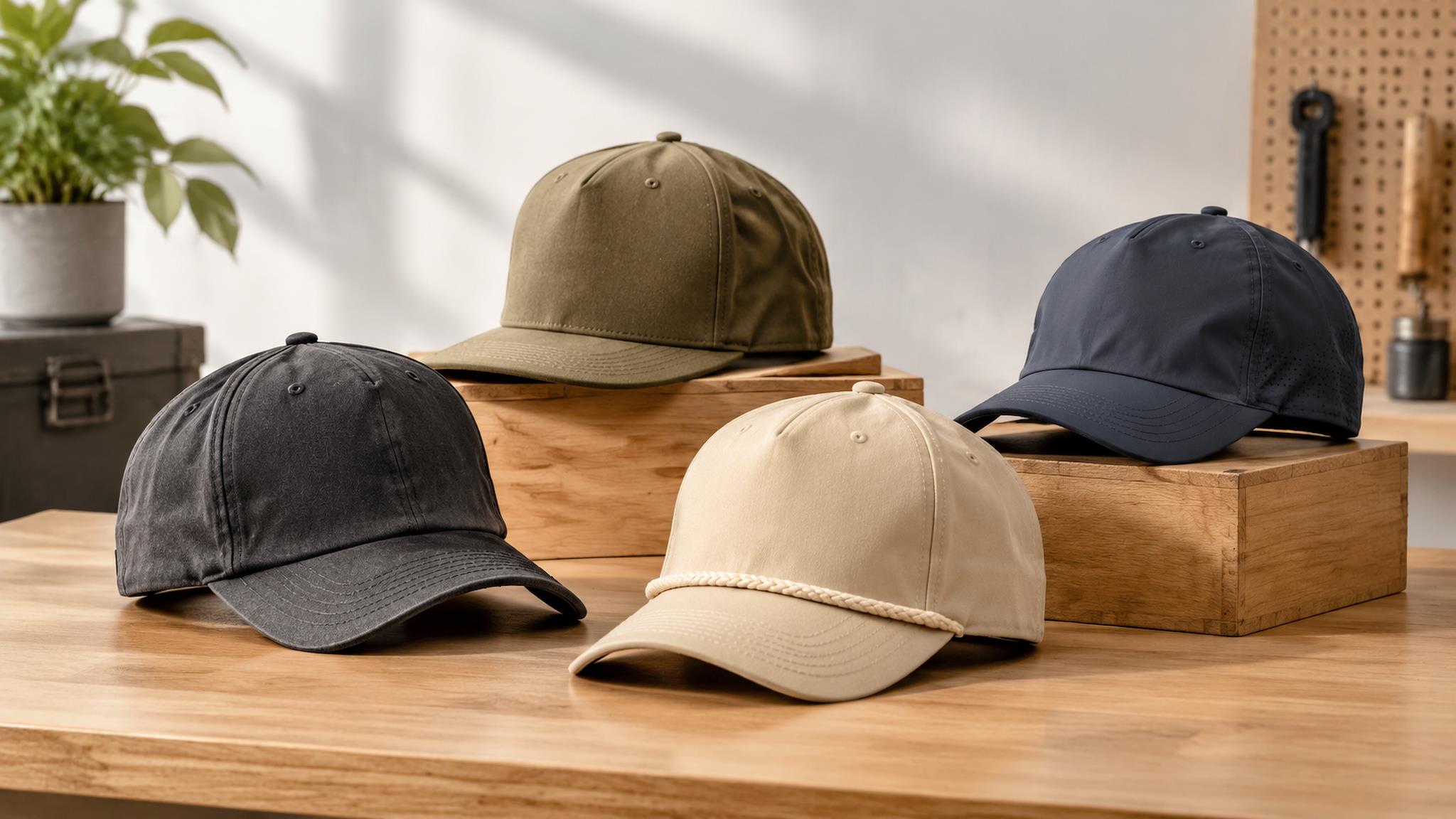
A retail-quality custom hat is designed and manufactured to be sold as a finished branded product—not simply distributed as a low-cost giveaway.
It should meet the customer’s expectations in several areas:
Retail quality does not always mean using the most expensive material or the most complicated construction.
It means that every component supports the product’s intended customer, purpose and price point.
A lightweight running cap, for example, should not be judged by the same criteria as a structured wool-blend snapback. The running cap may prioritize ventilation, moisture management and low weight, while the snapback may prioritize crown shape, embroidery definition and structural stability.
The correct question is not simply, “Is this a high-quality hat?”
Brands should ask:
Does this hat deliver the design, comfort, function and durability our target customer expects at our intended retail price?
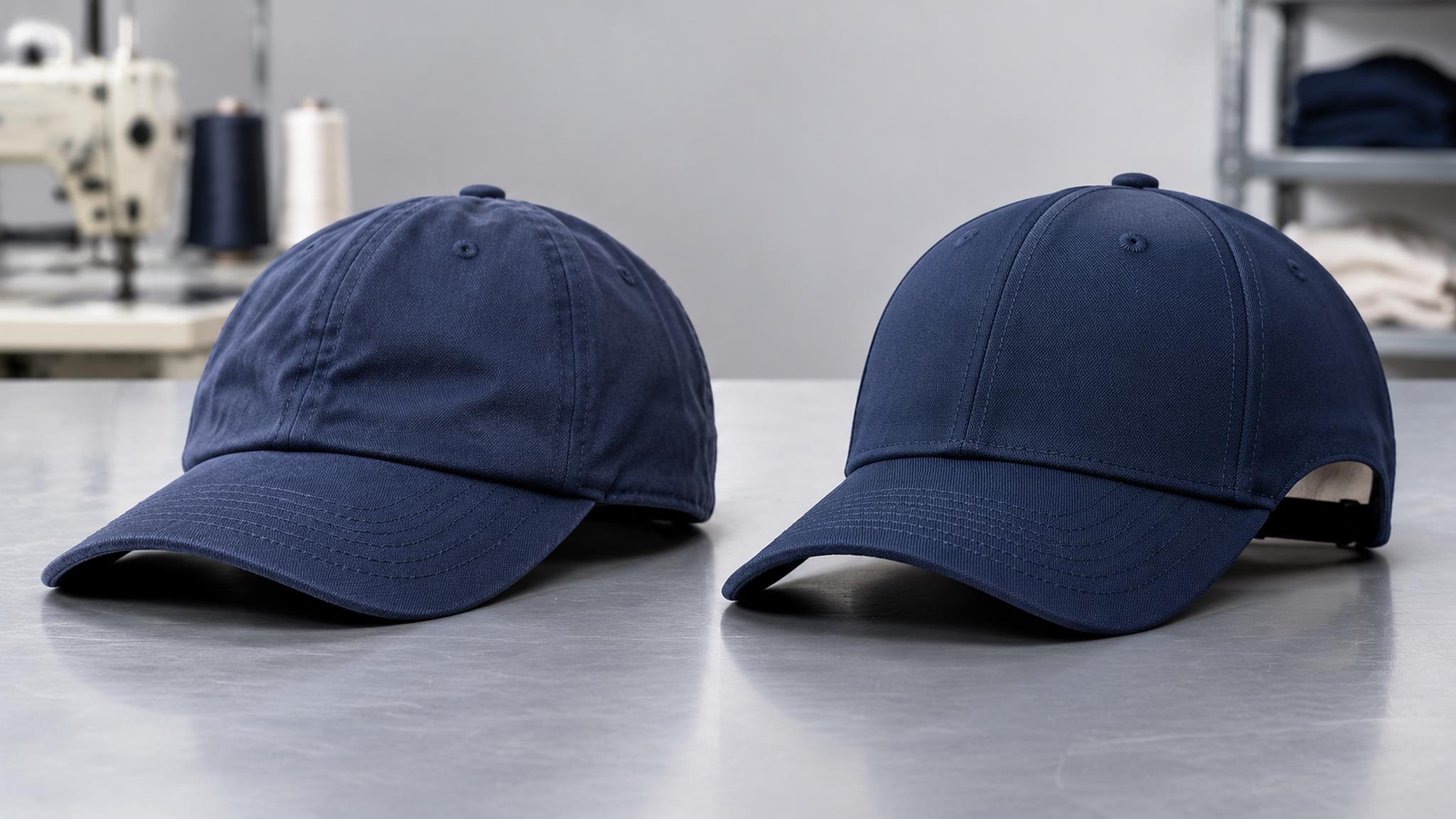
Promotional hats and retail-quality custom hats can both be useful, but they serve different purposes.
| Basic promotional hat | Retail-quality custom hat |
|---|---|
| Developed primarily for giveaways | Developed for sale or long-term use |
| Price is often the main priority | Overall value is the main priority |
| Standard blank or basic construction | Selected or custom-developed construction |
| Simple front logo | Coordinated branding system |
| Limited material options | Materials selected for the target market |
| Basic internal finishing | Branded and carefully finished interior |
| General fit | Fit developed for the intended customer |
| Bulk packaging | Retail-ready packaging when required |
A promotional hat may be appropriate for a one-day event or large giveaway. A retail-quality hat is more suitable for fashion collections, company stores, golf shops, resorts, hospitality merchandise and premium employee gifts.
Before requesting a quotation, brands should decide which category the project belongs to. Otherwise, they may compare suppliers offering completely different product standards.
Retail-quality development begins before the first sample is produced.
Brands should define:
A US$25 lifestyle cap and a US$60 technical outdoor cap require different materials, functions and quality standards.
Without a target price and customer profile, the manufacturer may recommend a product that is either too basic or unnecessarily expensive.
A useful sourcing brief might say:
We need an unstructured six-panel cotton cap for a premium café brand. The target customer is 20–35 years old, the intended retail price is US$32, and the first order will include two colors with subtle front embroidery.
This gives the supplier much more useful information than simply asking for “your best-quality cap.”
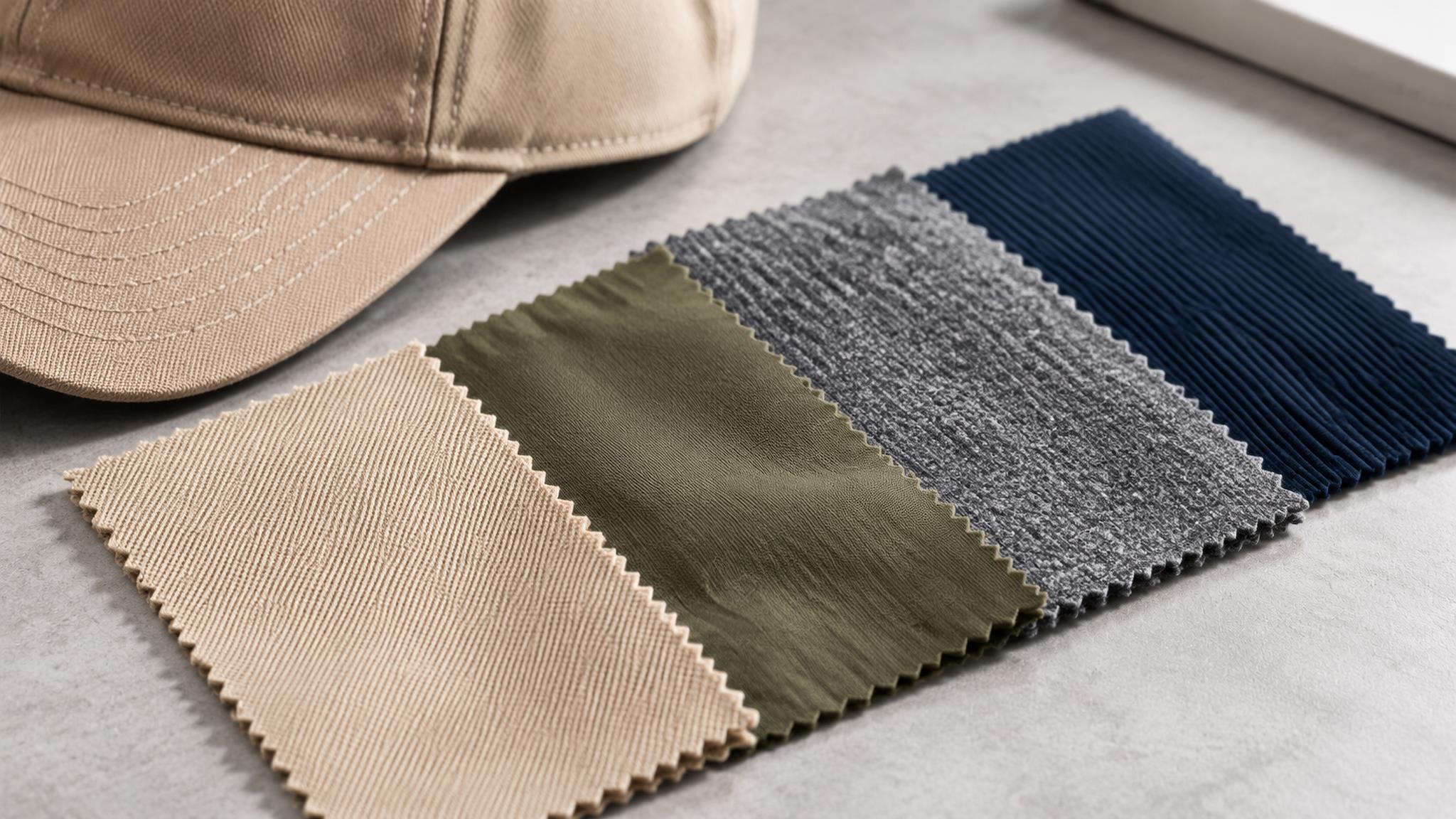
Fabric is one of the first things customers notice when touching a hat.
However, buyers should evaluate more than color and surface appearance.
Important fabric characteristics include:
Cotton twill remains a popular choice for baseball caps, dad hats and lifestyle headwear. It is comfortable, familiar and suitable for embroidery.
Washed or brushed cotton can create a softer, more casual appearance. However, the washing process may introduce color variation and shrinkage, which should be controlled during production.
Polyester and nylon are commonly used for performance, golf, running and outdoor hats.
They can offer:
Lightweight technical fabrics must be tested carefully with embroidery. Dense stitching may distort or wrinkle the front panel.
Wool blends can create a more premium or seasonal appearance. They are often used for structured caps, fitted hats and heritage-inspired designs.
Brands should check fiber composition, surface consistency and care requirements before approval.
Recycled polyester, recycled nylon, organic cotton and recycled cotton blends are increasingly requested by brands.
When environmental claims are important, buyers should ask for supporting documentation rather than relying only on a material description.
Also confirm whether certification applies to:
A retail-quality product should combine credible material claims with durability. A product that wears out quickly does not become more responsible simply because it includes recycled content.
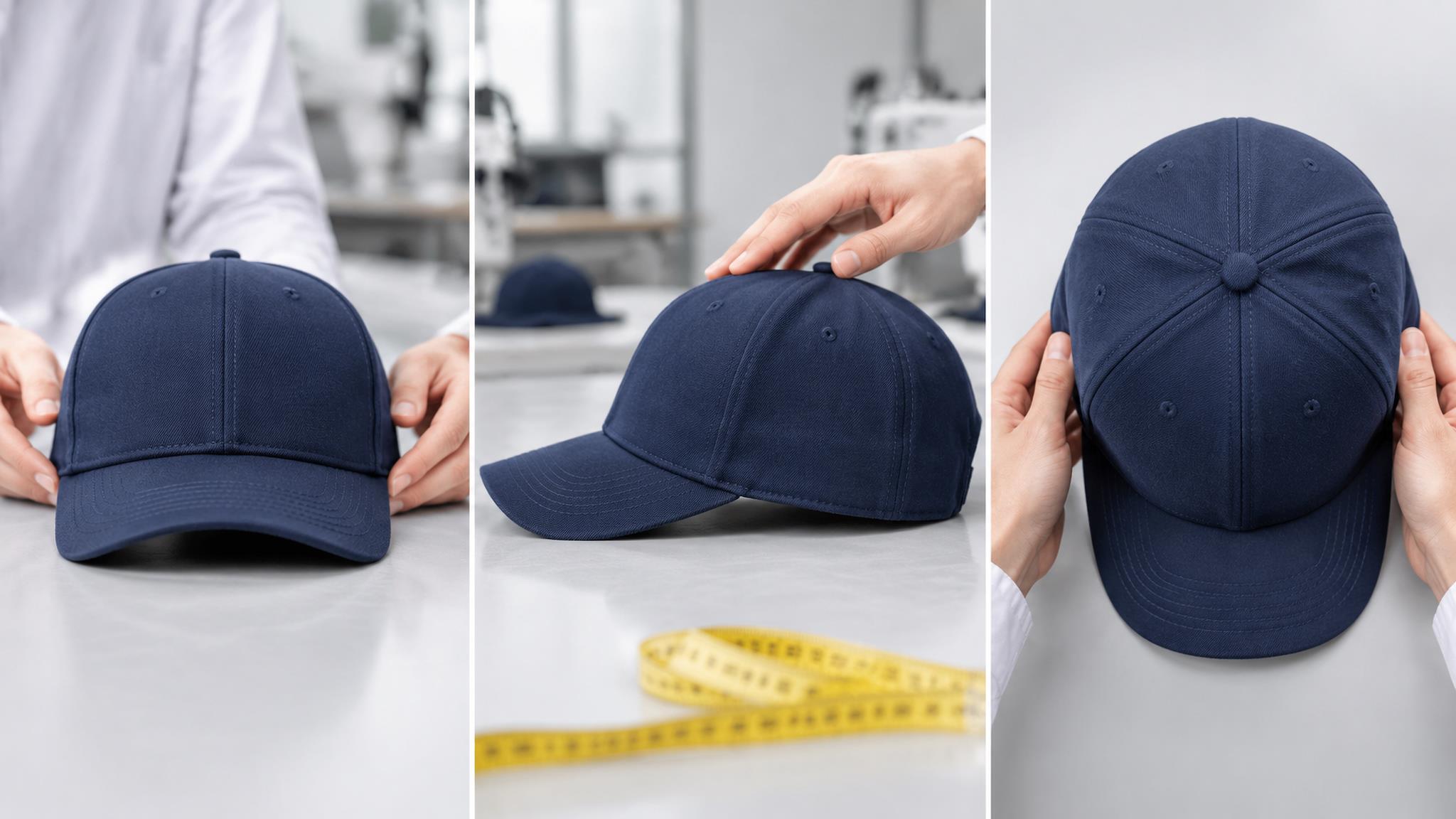
A hat can use excellent fabric and perfect embroidery but still fail if the fit is uncomfortable or the shape looks wrong when worn.
Important fit measurements include:
Small pattern changes can make a significant difference.
An A-frame cap, low-profile dad hat, five-panel running cap and structured snapback should not share the same crown proportions.
Do not evaluate a sample only on a table or mannequin.
Ask several people within the intended customer group to wear it. Observe:
For unisex collections, the adjustment range and crown proportions should suit a reasonable variety of head sizes.
Fitted hats require even more careful size grading because there is no adjustable closure to correct an inaccurate fit.
The internal construction determines how the hat holds its shape over time.
Depending on the style, construction elements may include:
A structured baseball cap should keep a clean front shape without feeling excessively stiff. An unstructured cap should appear relaxed without looking uneven or unfinished.
Check whether the front panels are symmetrical and whether seams meet correctly at the top button. Look at the hat from the front, side, back and top.
Retail-quality construction should appear intentional from every angle.
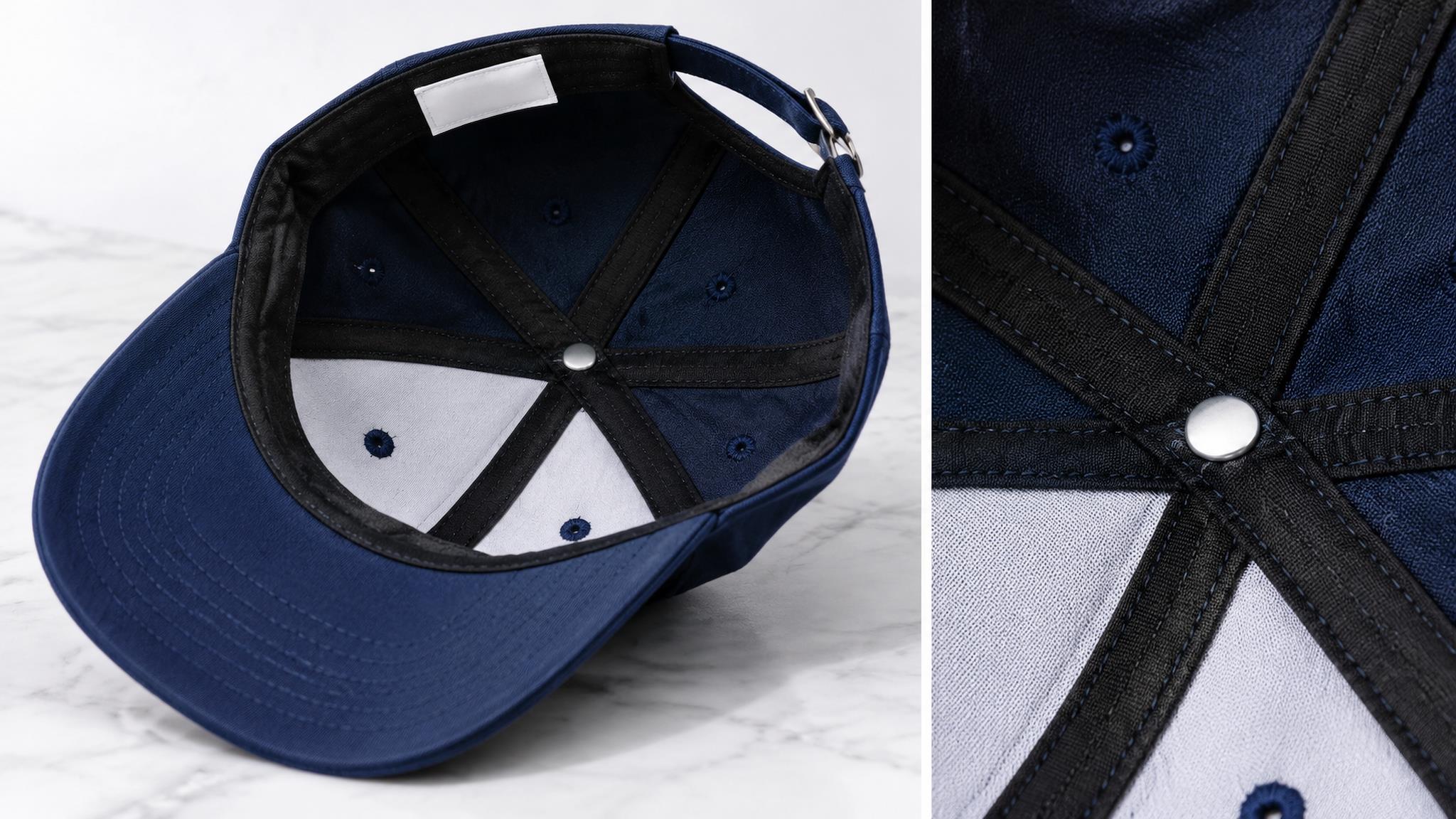
Customers may first notice the outside of a hat, but the inside often reveals the true manufacturing standard.
Inspect:
Stitch length and tension should remain consistent. Seams should not twist or create unnecessary bulk.
The sweatband should be smooth, securely attached and comfortable against the skin. It should not feel rough or excessively rigid.
Interior seam tape offers another branding opportunity, but it must still be applied evenly. A custom print does not compensate for poor alignment or untidy sewing.
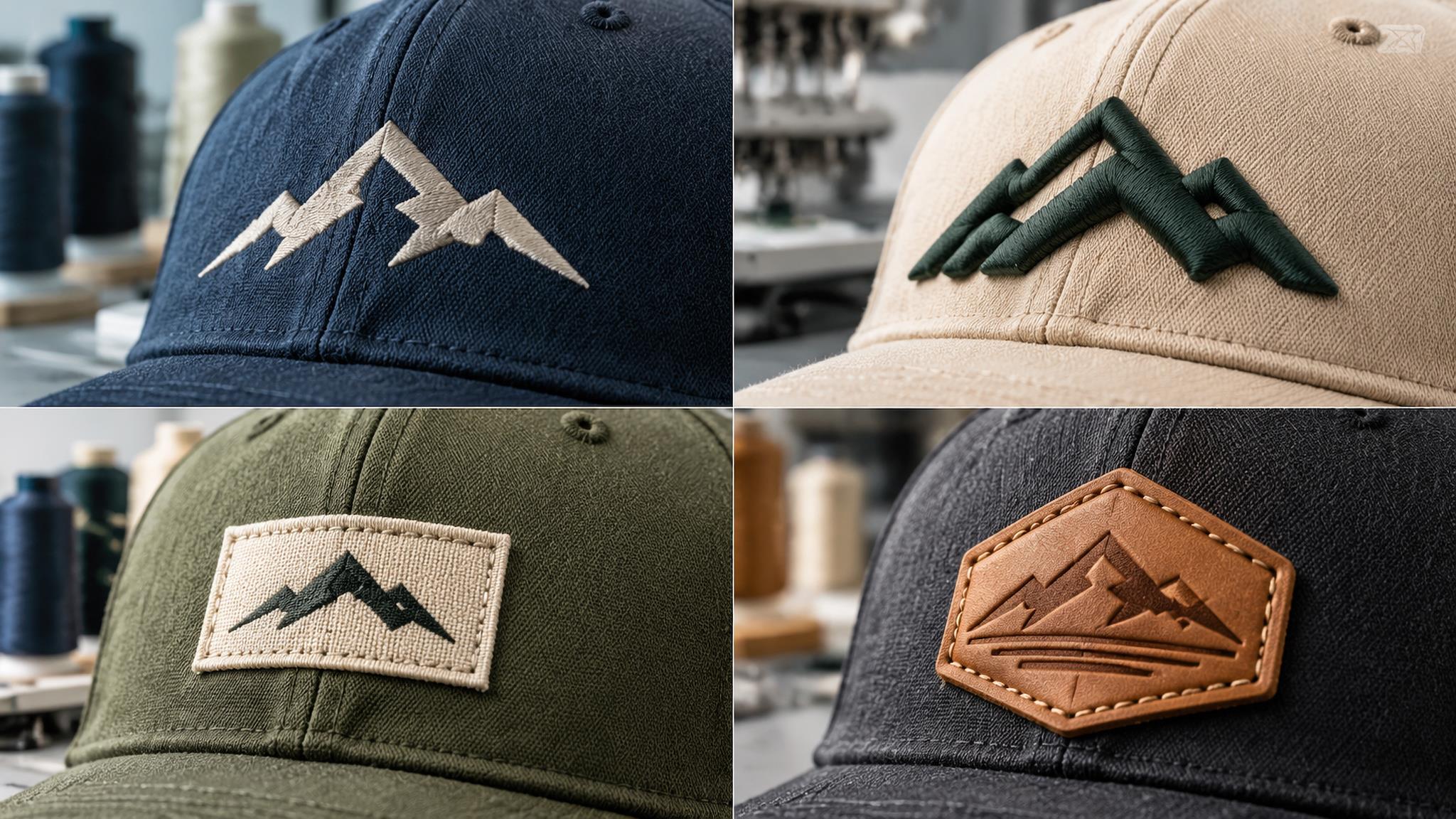
Retail-quality branding should complement the hat instead of appearing added at the last minute.
Common decoration methods include:
Flat embroidery is versatile and suitable for many cotton and polyester hats. Its quality depends on digitizing, stitch density, thread tension and fabric stability.
Check for:
3D embroidery works best for bold letters and simple shapes. Very small details and thin lines may not sew clearly.
The foam should be fully covered, and the edges should appear clean rather than rough.
Patches add texture and allow brands to work with detailed graphics. The patch should be securely attached and correctly proportioned to the front panel.
Check the edge finishing, color accuracy, surface quality and attachment method.
Transfers can work well on lightweight performance hats where dense embroidery might damage the fabric.
Test adhesion, flexibility and resistance to heat, moisture and repeated use.
The most expensive decoration method is not automatically the best. The correct method should suit the logo, fabric, product use and brand positioning.
Retail-quality headwear does not need to display a large logo on every surface.
Many brands are moving toward quieter, more integrated branding such as:
These details can make the product feel more considered.
However, adding too many branding elements may increase costs and make the hat appear overdesigned. Select details that support the overall visual identity.
For a minimalist fashion brand, tonal embroidery and a custom metal closure may be enough. A running brand may use a small reflective transfer and printed internal taping.
The closure is both a functional component and a visible design detail.
Common closure options include:
Test whether the closure:
Custom hardware can create a premium impression, but it may involve mold costs and higher minimum quantities.
Brands with smaller orders can achieve a similar effect by choosing high-quality existing hardware in a suitable finish.
Color differences are a common source of disagreement between brands and manufacturers.
Computer displays, digital mockups and mobile-phone photographs cannot reliably represent fabric colors.
For important brand colors, use:
Also evaluate how the color appears:
A cotton crown, polyester mesh and plastic closure may not reproduce one color identically. The objective should be a visually coordinated result rather than assuming different materials will always match perfectly.
A retail-quality custom hat should not move into bulk production based only on a digital mockup.
A physical sample allows the brand to verify:
Provide written comments after every sample round. Avoid vague feedback such as “make it more premium” or “the shape looks strange.”
Instead, give specific instructions:
Once approved, the final sample should become the reference for bulk production.
Changes made after approval can affect price, lead time and consistency.
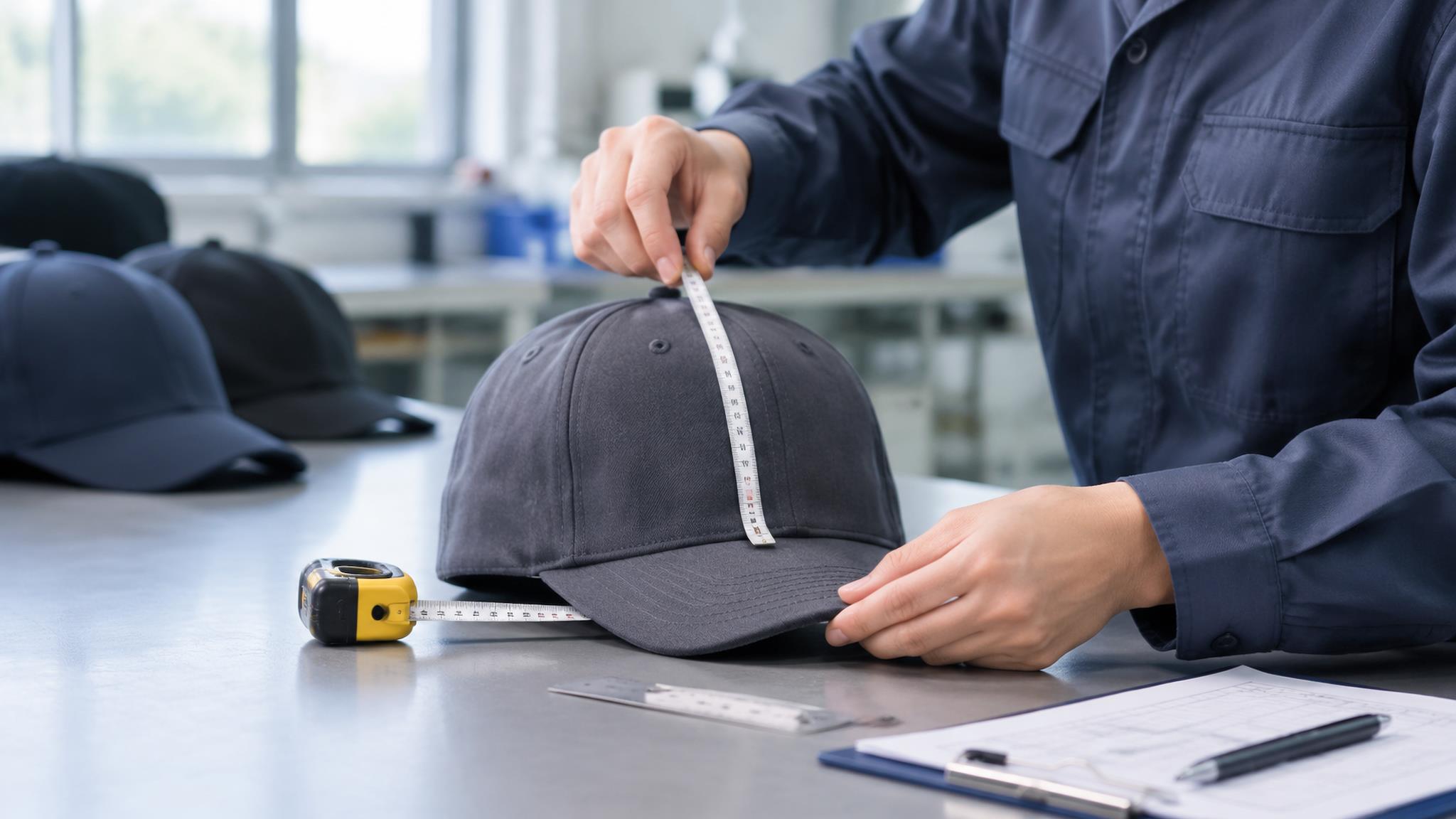
Use this checklist before approving a sample:
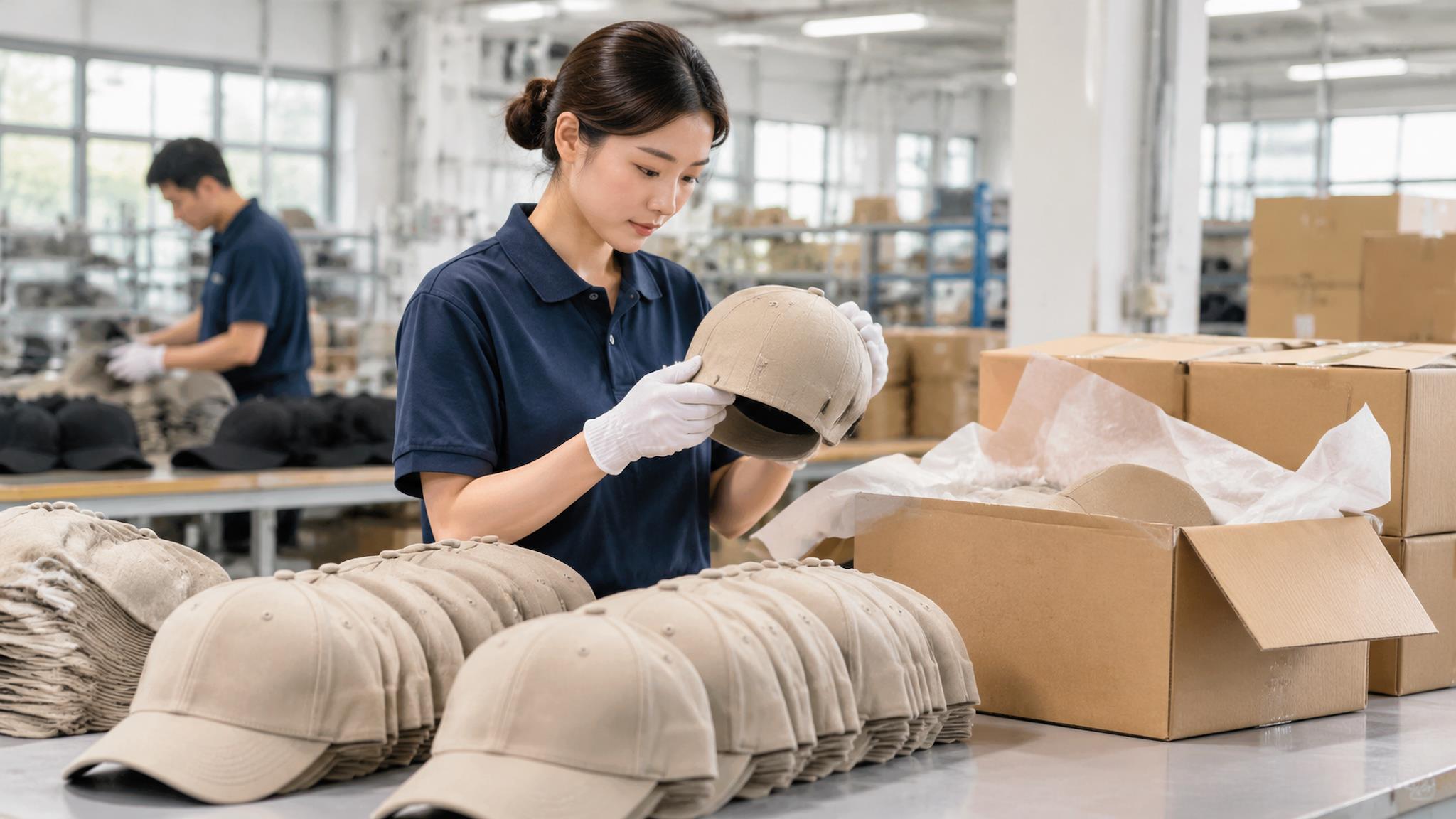
A perfect sample does not guarantee that every bulk-production hat will be identical.
Brands and manufacturers should agree on measurable quality standards before production begins.
Important standards may include:
Quality inspection should cover more than visible defects. Inspectors may also check measurements, labels, quantities, packaging and carton markings.
For larger or higher-risk orders, brands may arrange a pre-shipment inspection before the goods leave the factory.
A good sample can be produced by a skilled sample room, but the supplier must also reproduce it consistently during bulk manufacturing.
When selecting a premium custom hat manufacturer, ask:
A reliable supplier should communicate limitations as clearly as capabilities.
Be cautious if a supplier agrees to every request without reviewing the artwork, material availability, quantity or delivery deadline.
The lowest quotation does not necessarily represent the lowest final cost.
A quotation may exclude:
Poor fit, inconsistent logos or late delivery can also create costs through returns, rework, markdowns and damage to the brand’s reputation.
Compare suppliers using the same specifications and trade terms.
The most useful calculation is not only the factory price per hat. It is the total cost of receiving a product that can be sold confidently.
Retail influence is expected to remain important across team, golf, lifestyle and promotional headwear. Current directions include rope caps, A-frame caps, trucker hats and premium performance styles.Formula4Media
Brands should watch the following product directions:
Trends should guide product development, but they should not replace a clear understanding of the brand’s customer.
A well-made classic hat is usually more valuable than a poorly executed trend product.
A retail-quality custom hat combines appropriate material, comfortable fit, balanced construction, clean stitching, accurate decoration and consistent production. It should meet the expectations associated with its intended retail price.
Not necessarily. Good product development means investing in the details customers notice while avoiding unnecessary features. Standard materials and hardware can still produce a strong retail product when the fit and construction are correct.
Decorated blanks can suit small orders, fast programs and simple merchandise. Fully custom manufacturing offers greater control over fit, materials, colors, labels and construction. The correct option depends on quantity, budget and brand requirements.
The number depends on the complexity of the design and the accuracy of the first sample. Brands should continue revisions until all important specifications are confirmed rather than approving a product only to save time.
Yes, but the logo size, stitch density, backing and fabric stability must be evaluated. A transfer or silicone decoration may be more suitable for some lightweight materials.
Provide the hat style, material, quantity, colors, measurements, logo artwork, decoration positions, labels, packaging, delivery country and required completion date.
Keep the approved sample, specification sheet, color standards and inspection criteria. Ask the manufacturer to confirm any material or process changes before producing the repeat order.
Retail-quality custom hats are not defined by one expensive material or fashionable feature.
Quality comes from the relationship between design, fit, fabric, construction, decoration and production consistency.
In 2027, brands should focus on creating hats that customers genuinely want to wear. That may mean a soft washed cap with tonal embroidery, a technical running hat with reflective branding or a structured rope cap developed for a golf collection.
Whatever the style, the sourcing process should include:
These steps help turn a custom hat from a simple logo product into credible branded merchandise.
HAIXING provides OEM and ODM custom headwear development for fashion brands, outdoor companies, promotional-product distributors and retailers.
Our team can support:
Send us your artwork, reference images, target quantity and expected delivery date to start developing your retail-quality custom hat collection.
Contact HAIXING to request a quotation or begin sample development.